Sensex Fell as NSE Went Public. Here's What Actually Hit It.
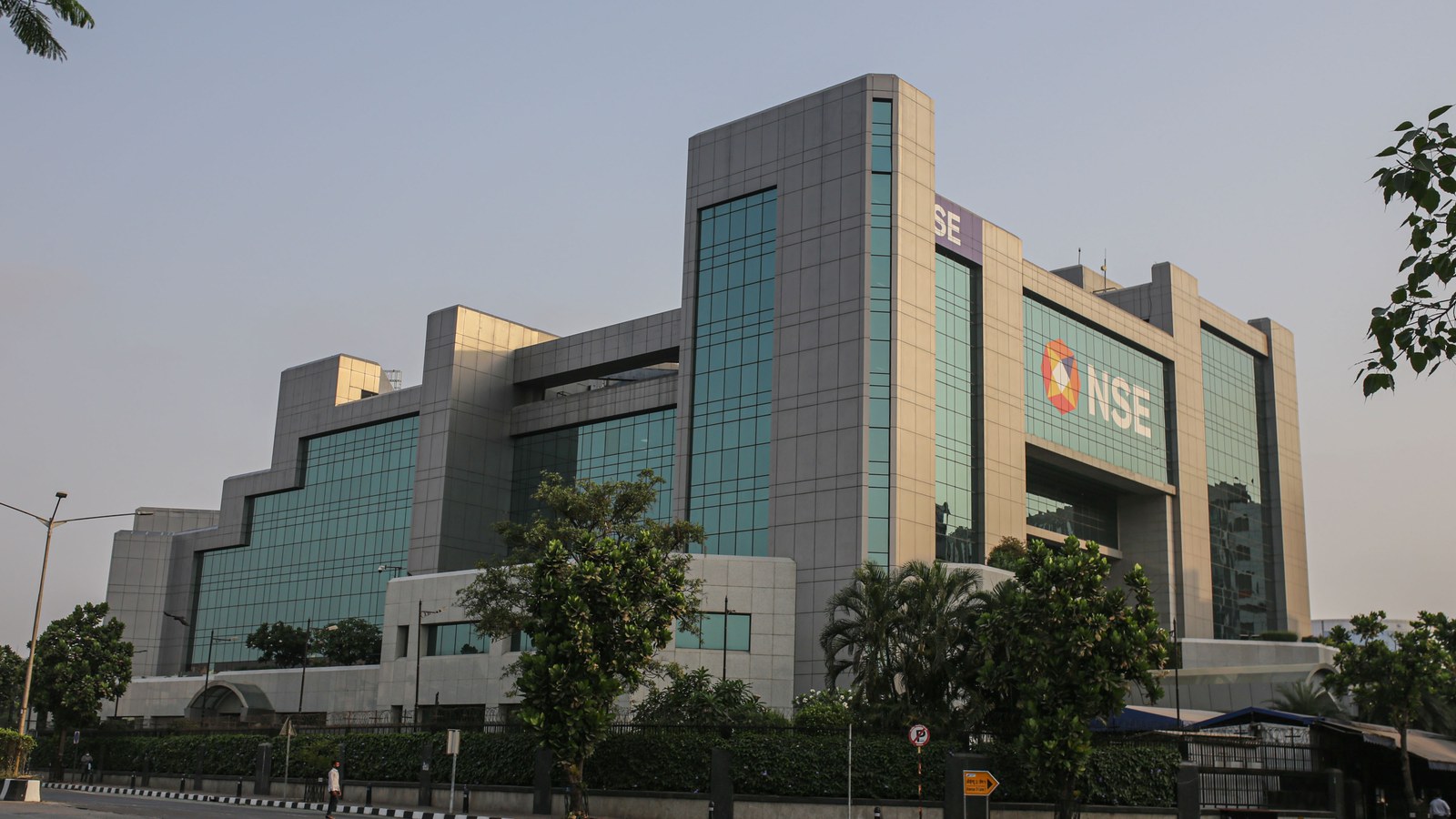
The National Stock Exchange listed its own shares on Wednesday, September 24, the same trading session the Sensex and Nifty both fell, dragged down by crude oil back above $100 a barrel, rising US Treasury yields, and a new insurance regulation that hit financial stocks specifically. The irony sits right there in the numbers: the exchange itself had a modest but positive debut while the index built on the stocks it lists slid. None of the three drags are related to each other, which is itself worth understanding, since it means there’s no single story here, just three separate pressures landing in the same session.
NSE’s Own Debut
NSE’s Rs 22,560 crore IPO, priced at Rs 1,785 a share, was subscribed 5.71 times over its three-day bidding window, itself a follow-on to the price band IndiaRealTime covered on September 14. The stock listed on the BSE at Rs 1,800, a premium of just 0.84 percent to the issue price, a flat open given the subscription demand. It firmed up through the session, trading as high as roughly 3.1 to 3.3 percent above the issue price intraday. A modest listing pop for the exchange that runs the index everyone else was watching fall.
What Actually Dragged the Index Down
| Pressure | What happened |
|---|---|
| Crude oil | Brent crude back above $100 a barrel, trading around $102 |
| US Treasury yields | Higher yields pulled global equity sentiment down, India included |
| IRDAI commission proposal | New draft rules capped insurance distribution commissions, hitting financial stocks hardest |
The crude oil move is a repeat of the same pressure IndiaRealTime covered on September 13, when Brent first crossed $100 without pump prices moving. Every barrel India imports gets costlier in dollar terms when Brent rises, which widens the trade deficit, pressures the rupee, and feeds through to inflation expectations, all things equity markets price in immediately even though retail fuel prices themselves move much slower. Higher US Treasury yields work on markets more indirectly: they make dollar assets relatively more attractive versus emerging-market equities, which tends to pull foreign investment out of markets like India’s.
Why Insurance Stocks Took the Biggest Hit
The steepest single-sector losses weren’t about oil or yields at all. IRDAI put out a draft proposal capping how much insurers can pay in commissions to agents and distributors, a structural change aimed at reducing the industry’s reliance on large upfront payouts that reward signing a new policy over keeping an existing one paid up. For individual life products, the draft proposes distributor commissions of 5 to 20 percent and agent commissions of 6.25 to 25 percent, depending on how long the premium payment term runs, with the lowest caps applied to the shortest terms. Separately, insurers would have to bring their overall expenses of management down to 15 percent of gross premium within two years and to 12.5 percent within five.
The logic is straightforward: a commission structure weighted toward the first year gives agents a reason to chase new sign-ups over renewals, and IRDAI’s stated goal is to shift that incentive toward keeping customers paying over the life of a policy. But the market’s reaction was immediate. Insurance and insurance-linked stocks fell between 10 and 20 percent on the day the draft came out, with named losers including L&T Finance, down 7.6 percent, Bajaj Finance, down 4.7 percent, and Max Financial Services, down 11.8 percent. That sector-specific selloff is a large part of why the broader index fell more than a generic bad-oil-day would explain on its own.
The Point Numbers Depend on When You Check
Live market coverage reported different Sensex and Nifty figures through the day, which isn’t a contradiction, it’s what a rolling intraday selloff looks like at different snapshots. Early-session reports had the Sensex down around 633 points (0.84 percent) and Nifty down 216 points; later in the session those losses had widened to roughly 862 points (1.15 percent) on the Sensex and 277 points on the Nifty, near the 23,170 level. Rather than pick one number and present it as definitive, both snapshots are worth knowing, since they show the selling pressure built through the day rather than hitting all at once at the open.
For live index levels as they move, IndiaRealTime’s stock market tracker updates through the session rather than freezing at a single reported number. Readers who track the rupee side of this, given how oil and yields both move the currency, can follow it on IndiaRealTime’s currency pages, including the context behind why the rupee broke past 95 to the dollar earlier this month. And for readers who’d rather sit out equity volatility entirely, IndiaRealTime’s gold price page tracks the asset that typically moves opposite to days like this one.
FAQs
Why did the Sensex and Nifty fall on September 24?
Three separate pressures landed together: Brent crude back above $100 a barrel, rising US Treasury yields pulling global sentiment down, and an IRDAI draft proposal capping insurance commissions that hit financial stocks hardest.
How did NSE’s own shares perform on listing day?
NSE listed at Rs 1,800, a 0.84 percent premium to its Rs 1,785 issue price, then traded up to roughly 3.1 to 3.3 percent above issue price intraday, a modest but positive debut.
What exactly did IRDAI propose?
Caps on life insurance distribution commissions, 5 to 20 percent for distributors and 6.25 to 25 percent for agents depending on premium term, plus limits bringing insurers’ expenses of management down to 15 percent of gross premium within two years and 12.5 percent within five.
Why did insurance stocks fall so much more than the broader market?
Because the IRDAI proposal directly cuts a major revenue lever, commission income, for insurers and their distribution partners, unlike the oil and yield pressures which affect sentiment more broadly across sectors.
Why do different reports give different point-drop numbers for the same day?
Because they’re intraday snapshots taken at different times. The Sensex’s loss widened from roughly 633 points early in the session to roughly 862 points later on, both accurate for the moment they were reported.
Sources
- Business Standard: Stock market live, September 24, Sensex, Nifty, NSE share price, Brent crude oil price
- Sunday Guardian: Sensex-Nifty fall sharply as oil climbs above $100 and US Treasury yields rise
- India TV News: NSE IPO listing highlights, shares list at a premium of 0.84 percent over issue price
- Upstox: NSE IPO listing, share price live updates
- Business Standard: IRDAI proposes tighter expense limits, new commission caps for insurers
- Free Press Journal: Insurance stocks come under pressure over proposed commission limits
Updated September 24, 2026.

Want more like this?
Explore India Real Time →