Kerala Lottery Winners Take Home Far Less Than Rs 1 Crore
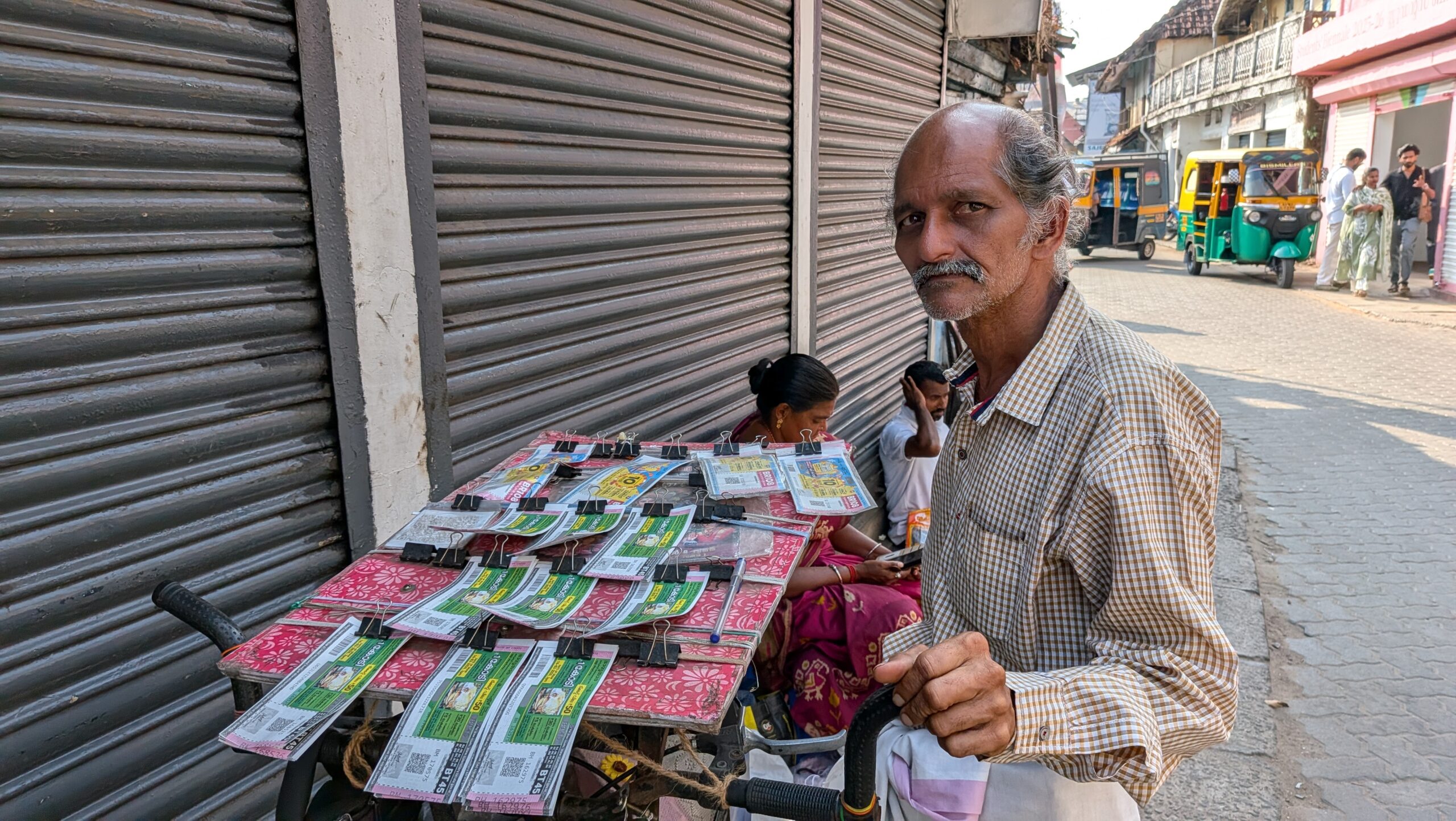
The Kerala State Lotteries department drew Sthree Sakthi SS-537 at 3 pm on Tuesday, and ticket SW 424460, sold in Kottayam, won the Rs 1 crore first prize. Searches for “lottery result” spike like this most afternoons, five or six times a week, because Kerala is the only state in India that runs its lottery as a government department rather than handing the business to private promoters. What gets lost in the daily results chase is what a Rs 1 crore ticket actually pays out once tax is withheld, and how much this business is really worth to the state that runs it. Both numbers are smaller than most people assume.
What happened today
Tuesday’s draw was held at Gorky Bhavan in Thiruvananthapuram, the department’s regular venue. SW 424460 (Kottayam) took the Rs 1 crore first prize, SS 202828 (Malappuram) won the Rs 30 lakh second prize, and SP 111210 (Kattappana) won Rs 5 lakh for third. Winners have 30 days from the draw date to claim, and first- and second-prize tickets have to be surrendered in person or by insured registered post to the Director of State Lotteries, or through a nationalised, scheduled, state or district co-operative bank. Results like these are published only on the department’s own channels; further down, there’s a note on why that distinction matters more than it sounds.
Why Kerala’s lottery looks nothing like the others
Lotteries are banned by default in India under the Public Gambling Act, and only run at all where a state government chooses to permit one under the Lotteries (Regulation) Act, 1998, which the Supreme Court has upheld as leaving that choice entirely to individual states. Roughly eight states currently allow some form of state-run lottery: Kerala, Sikkim, Goa, Maharashtra, Punjab, Assam, Meghalaya and Arunachal Pradesh among them, alongside Nagaland and Mizoram, where the trade is especially popular.
Most of those states license the actual selling and marketing to private distributors, which is why paper lottery tickets from Nagaland or Sikkim turn up in shops far outside their home state. Kerala is the outlier: its lottery is run directly by a state government department, with no private promoter in between, tickets sold through a licensed agent-and-seller network right down to the cart-and-bicycle vendors who work Kerala’s town junctions. That structure is also why the state can publish a genuinely daily draw, seven days a week under different lottery names, rather than the weekly draws typical elsewhere.
The real math: what a Rs 1 crore ticket actually pays
Lottery winnings get no benefit of the basic exemption limit and no deductions of any kind. Under Section 115BB of the Income Tax Act, they’re taxed at a flat 30 percent, and under Section 194B the lottery department is required to withhold that 30 percent at source before it pays out anything over Rs 10,000. Add the mandatory 4 percent health and education cess, and the guaranteed minimum withholding on a Rs 1 crore prize works out to Rs 31.2 lakh, tax alone, before a rupee reaches the winner. That leaves Rs 68.8 lakh in hand at minimum, not the full crore the headline prize suggests.
It can work out to less than that. Winnings above Rs 50 lakh attract a surcharge on top of the base tax, 10 percent for winnings between Rs 50 lakh and Rs 1 crore, and 15 percent above Rs 1 crore, and the exact rate that applies depends on the winner’s total income for the year, not just the prize. This is the detail most casual coverage skips: the department’s TDS is a fixed floor, but the winner’s real, final liability is only settled when they file their return, and it can come out higher once their full income for the year is counted.
For anyone thinking about what to do with a lump sum like this, IndiaRealTime runs a lumpsum investment calculator and a fixed deposit rate comparison across major banks, both more useful starting points than the ticket itself once the tax is out of the way.
Kerala’s lottery economy, by the numbers
The department’s own numbers put this in perspective. In 2024-25, ticket sales brought in roughly Rs 13,244 crore, against total costs, prize payouts, agent commissions, staff and advertising, of about Rs 12,222 crore. That left the state with a net operating surplus of roughly Rs 1,022 crore for the year, part of a five-year run that has delivered a cumulative Rs 5,658 crore to the state exchequer since 2021-22, including a record Rs 1,774.52 crore in the most recent year. Kerala’s finance minister has previously pointed out that, for all the attention the lottery gets, it still accounts for only about half a percent of the state’s total budget.
| Year | Ticket sales | Surplus to state |
|---|---|---|
| 2022-23 | Not separately published | Rs 1,018 crore |
| 2023-24 | Not separately published | Rs 1,203 crore |
| 2024-25 | ~Rs 13,244 crore | Rs 1,101.99 crore* |
| 2025-26 | Not yet published | Rs 1,774.52 crore |
*Two department figures for 2024-25 surplus appear in public reporting, Rs 1,101.99 crore and a separately calculated Rs 1,022 crore net of that year’s sales and costs; both are included here rather than picking one, since the department has not reconciled the difference publicly.
A word of caution on results sites
The search spike around lottery results is exactly the kind of traffic that attracts copycat sites carrying wrong numbers, fake claim forms and outright phishing pages asking winners to pay a “processing fee” to release a prize. Kerala’s State Lotteries department never asks a winner to pay anything to claim money they’ve won, and the only results that count are the ones the department itself publishes and gazettes. Treat any site, including this one, as a convenience, and confirm a genuine win against the department’s own listing before acting on it.
Elsewhere on IndiaRealTime this week: Shree Charani set India’s highest-ever ICC T20I rating after the Women’s Asia Cup final, and NSE’s IPO price band finally opened for bidding after a decade-long wait.
FAQs
What did today’s Kerala lottery pay out?
The Sthree Sakthi SS-537 draw on September 15 paid a Rs 1 crore first prize to ticket SW 424460 (Kottayam), Rs 30 lakh second prize to SS 202828 (Malappuram), and Rs 5 lakh third prize to SP 111210 (Kattappana).
How much tax do lottery winners actually pay in India?
A flat 30 percent under Section 115BB, with no exemptions or deductions, plus a 4 percent cess, withheld at source under Section 194B for any win above Rs 10,000. That’s a minimum 31.2 percent. A surcharge of 10 to 15 percent can apply on top, depending on the winner’s total annual income.
Which states in India allow legal lotteries?
Around eight currently do, including Kerala, Sikkim, Goa, Maharashtra, Punjab, Assam, Meghalaya and Arunachal Pradesh, under the Lotteries (Regulation) Act, 1998. Kerala is the only one where the state itself runs the lottery directly, rather than licensing it to a private promoter.
How much does the lottery actually earn Kerala?
Around Rs 1,000-1,800 crore a year in net surplus in recent years, a cumulative Rs 5,658 crore over the five years to 2025-26, against roughly Rs 13,000 crore in annual ticket sales. The state’s finance minister has said this is still under half a percent of Kerala’s total budget.
How do I know a lottery result I’m reading is genuine?
Check it against the Kerala State Lotteries department’s own published results. The department never asks winners to pay any fee to release a prize, so any site or message demanding one is a scam.
Sources
- Onmanorama: Sthree Sakthi SS-537 result, September 15, 2026
- Asianet Newsable: Kerala Lottery Result Today, SS-537 winning numbers
- Onmanorama: Kerala lottery sales cross Rs 41,000 crore during second Pinarayi government’s tenure
- ETV Bharat: Kerala lotteries contribute Rs 5,658 crore surplus to state coffers in five years
- Deshabhimani: Lottery revenue constitutes only half a percent of Kerala’s state budget, finance minister clarifies
- Bajaj Finserv: Lottery tax in India, rate, TDS and calculation
- Lexology: Legality of lottery in India
Updated September 15, 2026, after the Sthree Sakthi SS-537 draw.

Want more like this?
Explore India Real Time →