Why Vishwakarma Puja Falls on September 17 Every Year
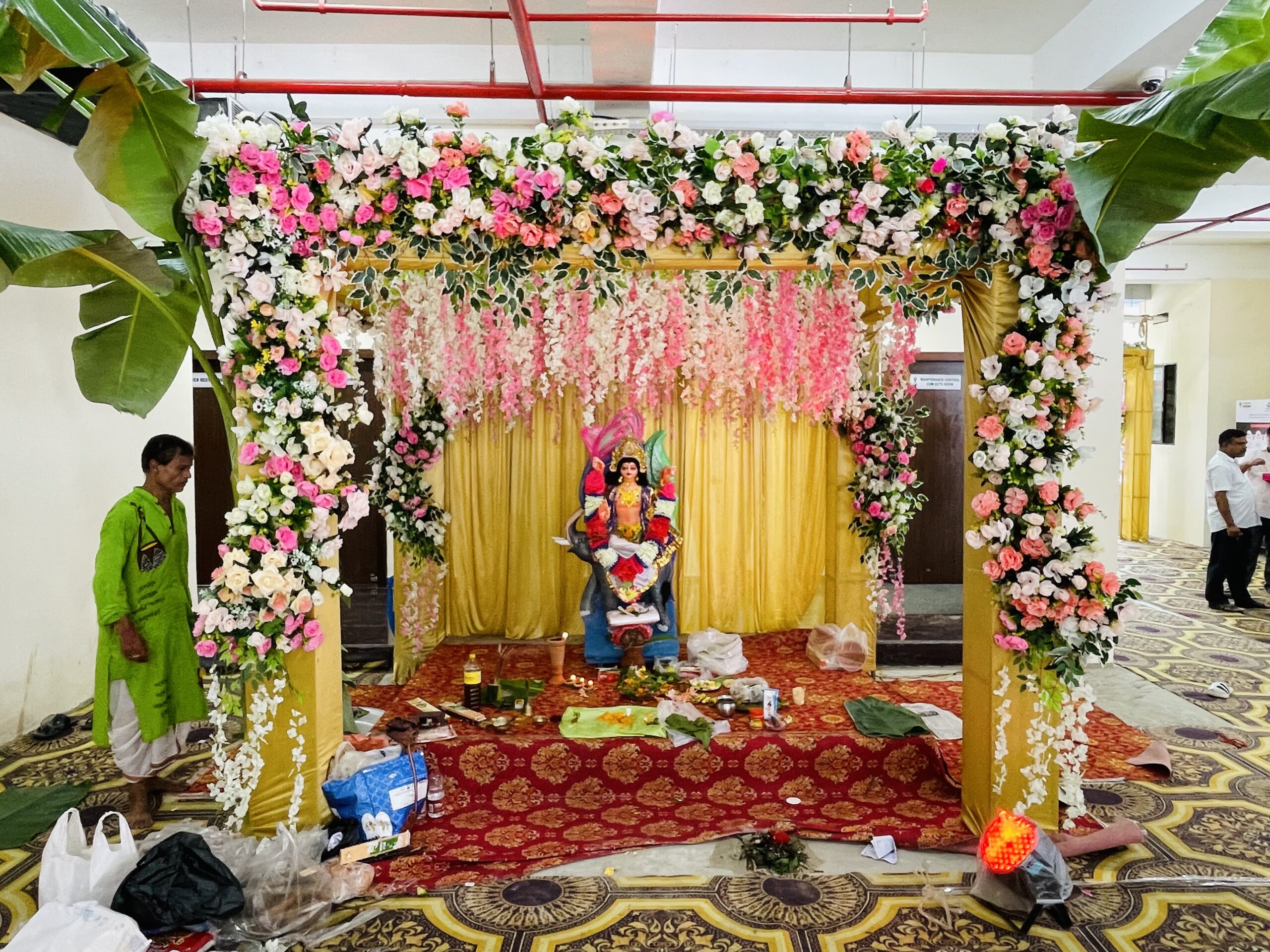

Every other major Hindu festival moves around the calendar, but Vishwakarma Puja never does. Diwali, Holi, Raksha Bandhan, even Ganesh Chaturthi, all shift by weeks from year to year because they follow the Moon. Vishwakarma Puja, observed today, follows the Sun instead, which is why it lands on September 17 with almost clockwork regularity, and why factory floors, engineering firms and machine shops across India stop work for it on a date you could have circled years in advance.
Why This Festival Never Moves
Most Hindu festival dates are set by tithi, a lunar day within the Hindu lunisolar calendar, which is why Diwali can fall anywhere from mid-October to mid-November depending on the year. Vishwakarma Puja instead follows Kanya Sankranti, the moment the Sun crosses from Leo into Virgo on the sidereal zodiac. Sankranti dates are solar, not lunar, so they barely move, typically landing within a day or two of the same Gregorian date every year. In 2026, that moment falls at 5:28 AM, and the Puja is observed the same day, September 17.
That is also why the date sits at the very end of the Bengali month of Bhadra, giving the festival its other regional name, Bhadra Sankranti. Kanya Sankranti itself always falls in a narrow window, roughly September 16 to 18, which is the entire reason Vishwakarma Puja looks fixed while almost every other festival on the Hindu calendar drifts.
Who Vishwakarma Is, and Why Machines Stop for Him
Vishwakarma is the Hindu deity of architecture, engineering and craftsmanship, credited in tradition with building the weapons of the gods and the great mythical cities. That portfolio is why his Puja is less a household festival and more a workplace one. Factories, construction sites, garages, print shops, power stations and engineering offices pause to clean and worship their tools, lathes, cranes and machinery, treating the equipment itself as an extension of the craft Vishwakarma represents.
It shows up in public life too. Government offices with an engineering or industrial mandate, from state electricity boards to oil and gas companies, routinely hold their own Puja on site, workers and staff gathering around a decorated idol on the shop floor rather than at a temple.
The Artisans Vishwakarma Represents Also Have a Government Scheme
Traditional artisan communities, carpenters, blacksmiths, sculptors, potters and goldsmiths among them, trace their craft lineage to Vishwakarma. That is the same group of trades the central government targeted with the PM Vishwakarma Yojana, launched in September 2023 to give collateral-free credit, skill training and modern toolkits to artisans in 18 traditional occupations. Two years on, the scheme has real numbers behind it, not just a festival’s worth of goodwill.
| PM Vishwakarma Yojana, as of mid-2026 | Figure |
|---|---|
| Applications received | 2.72 crore |
| Artisans registered | Roughly 30 lakh, against a 2028 target of 30 lakh |
| Loan applications sanctioned | About 5.9 lakh |
| Total loans sanctioned | Rs 5,083.76 crore |
| Beneficiaries who completed basic training | 23.99 lakh |
| Beneficiaries who received toolkits | 15.95 lakh |
| Beneficiaries paid digital transaction incentives | 7.80 lakh, worth Rs 33.15 crore |
The scheme’s structure follows the actual working life of an artisan rather than a one-time handout: a Rs 15,000 toolkit incentive to upgrade equipment, then collateral-free loans in two tranches, up to Rs 1 lakh first and up to Rs 2 lakh after that, alongside skilling and a small cash incentive for every digital transaction, nudging a cash-heavy trade toward UPI and card payments.
Among the 18 covered trades are sonars, goldsmiths, whose work sits at the other end of a supply chain IndiaRealTime tracks daily. If you want to see the raw material side of that trade, how gold prices are determined in India covers what a goldsmith is actually pricing against before a single ornament gets made.
Why This Combination Matters
A festival explainer and a government scheme update don’t usually belong in the same piece, but Vishwakarma Puja is unusual in that its mythology and its modern economic policy point at the exact same population, small, often informal, often cash-dependent artisans and tradespeople who rarely show up in headline GDP numbers. The Puja gives that population a day of visibility. The scheme is an attempt to give it something more durable, credit history, formal training records, a digital payment trail.
Whether 5.9 lakh sanctioned loans against 2.72 crore applications counts as fast progress or a bottleneck depends on where you sit, and that gap, roughly 4 applications sanctioned for every 100 received, is worth watching in the scheme’s data as it updates. The same informal, working-class economy is the backdrop to how much Kerala lottery winners actually take home, a different corner of the same India that doesn’t show up in stock market coverage.
Frequently Asked Questions
Why does Vishwakarma Puja always fall around September 17?
It follows Kanya Sankranti, the Sun’s solar transit into Virgo, rather than a lunar tithi. Solar transits barely shift from year to year, unlike Moon-based festival dates, which is why the Puja lands in the same narrow mid-September window every year.
Who is Vishwakarma?
Vishwakarma is the Hindu deity of architecture, engineering and craftsmanship, traditionally credited with building the gods’ weapons and celestial cities. Artisan trades including carpentry, blacksmithing, sculpture and goldsmithing trace their craft lineage to him.
What is the PM Vishwakarma Yojana?
A central government scheme launched in September 2023 offering artisans in 18 traditional trades a toolkit incentive, collateral-free loans up to Rs 3 lakh across two tranches, skill training and incentives for digital payments.
Why do factories and offices celebrate Vishwakarma Puja?
Because Vishwakarma is the patron of craftsmanship and machinery, industrial and engineering workplaces treat the day as an occasion to clean, decorate and worship their tools and equipment, often with an on-site Puja for staff.
Key Takeaways
- Vishwakarma Puja is fixed to the solar calendar, tied to Kanya Sankranti, which is why it lands on or near September 17 every year while lunar festivals like Diwali and Holi shift by weeks.
- It is primarily a workplace festival, observed at factories, engineering firms and industrial offices where tools and machinery are worshipped rather than only temple idols.
- The trades under Vishwakarma’s patronage have a live government scheme, PM Vishwakarma Yojana, with roughly 30 lakh artisans registered and Rs 5,083.76 crore in loans sanctioned as of mid-2026.
- Loan sanctions are still well behind applications, about 5.9 lakh sanctioned against 2.72 crore received, a gap worth tracking as the scheme matures.
This is also a week when several other numbers worth an artisan or a household’s attention have moved. NSE’s own IPO opened for bidding this week at a Rs 1,700-1,785 price band, tracked live on IndiaRealTime’s stock market page, and the rupee has been trading near record lows against the dollar, relevant if any of that toolkit or loan money is going toward imported equipment, a live rate is on our INR to USD tracker. And for the agricultural counterpart to today’s artisan economy story, how mandi prices actually work covers the other major informal-sector price system in India.
Sources

Want more like this?
Explore Panchang & Culture →